

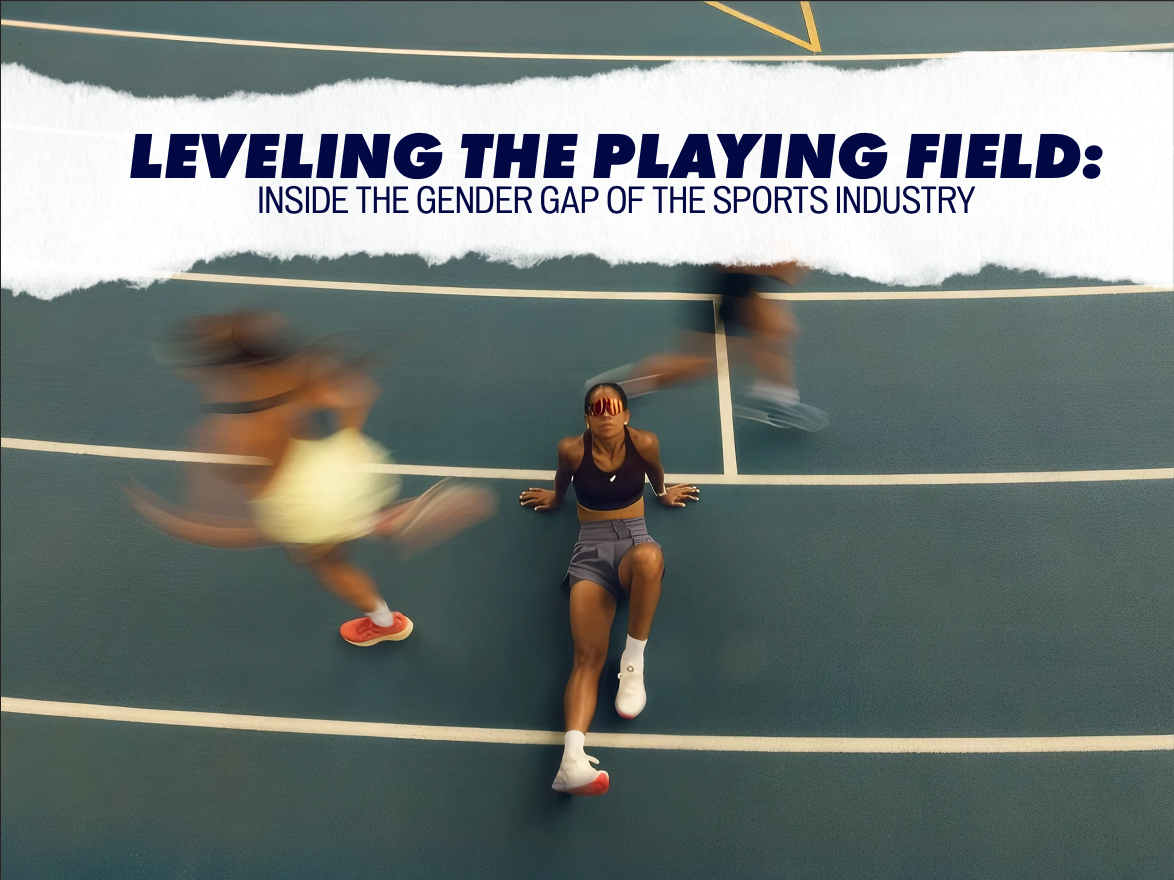
Leveling The Playing Field
SENIOR CAPSTONE PRESENTATION: INSIDE THE GENDER PAY GAP OF THE SPORTS INDUSTRY
INTRODUCTION
Women face inequalities everyday – from healthcare to underrepresentation to the pay gap. In sports, the gender pay gap highlights the ongoing inequalities that female athletes face compared to their male counterparts. While women’s participation and success in athletics have grown significantly over time, disparities in salaries, sponsorships, media coverage, and resources still remain. Many women’s leagues generate less financial support and visibility, which contributes to lower pay and fewer opportunities for athletes.
By collecting information and presenting it through clear,engaging design, this research helps make complex data more accessible and easier for audiences to understand.Increasing awareness is an important step toward change, as it encourages conversations about fairness, representation,and support for women’s sports. Ultimately, the goal of this project is to inform viewers while promoting greater visibility,advocacy, and appreciation for women in athletics.
PROTOTYPE 1
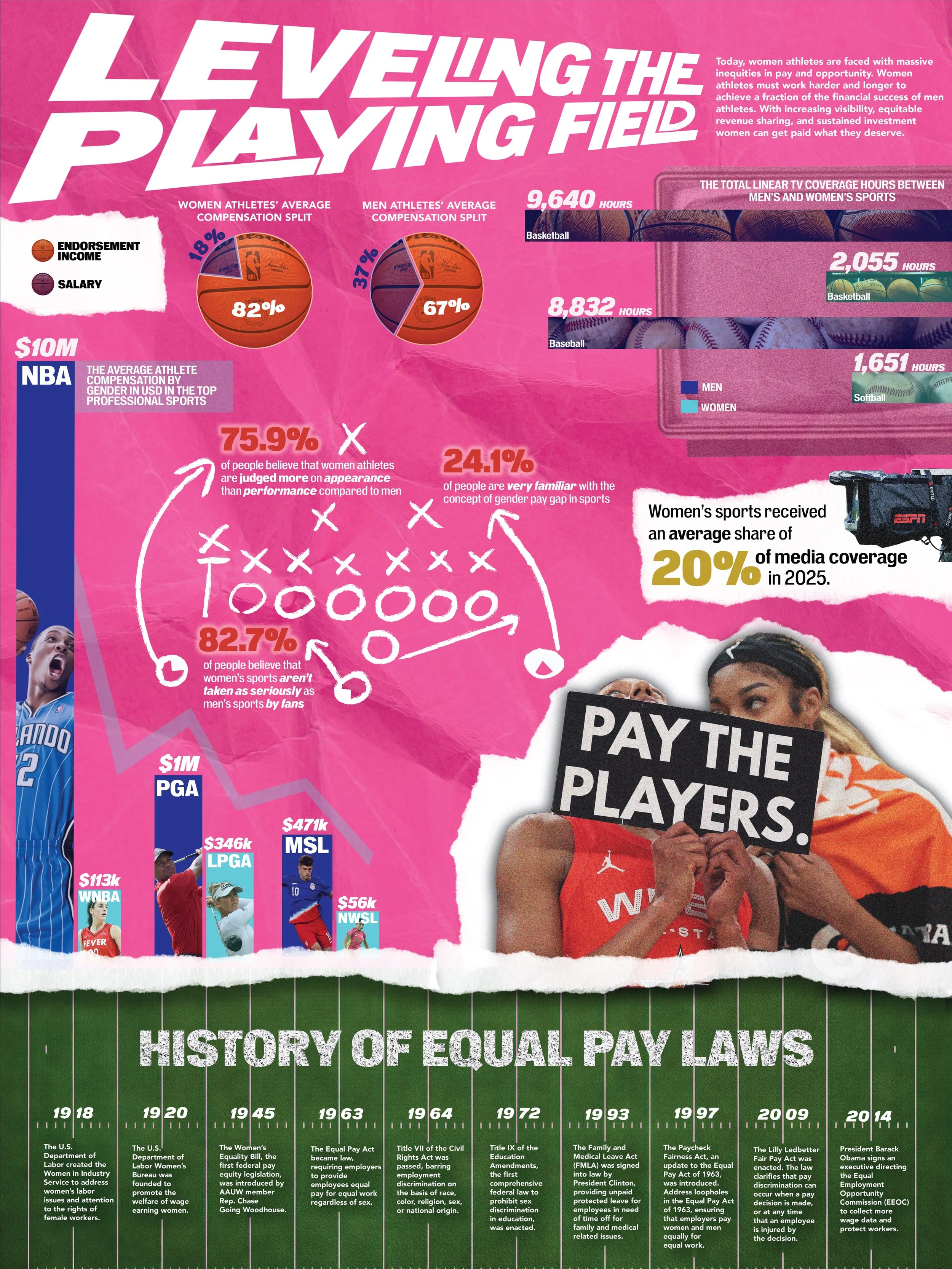
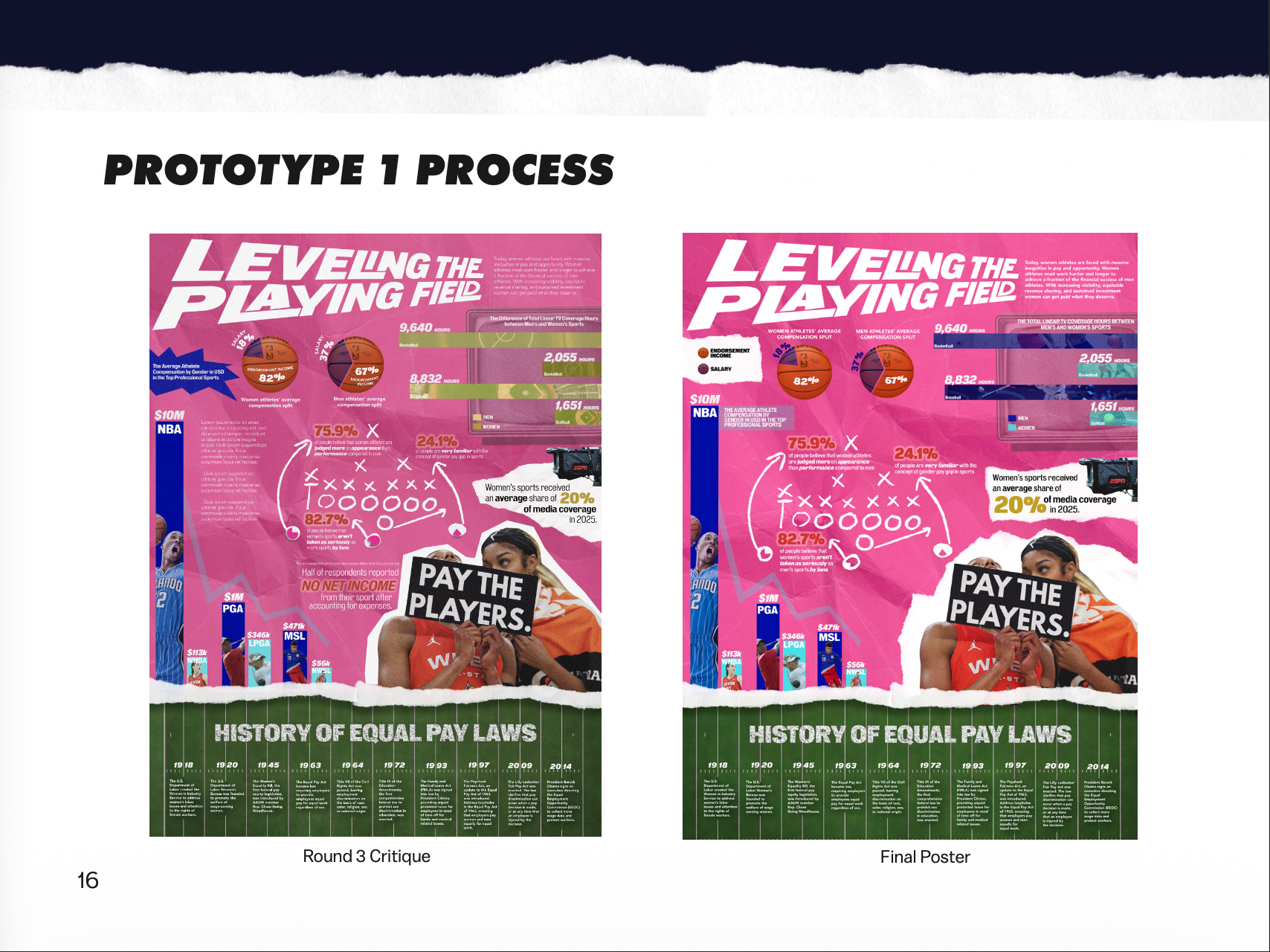
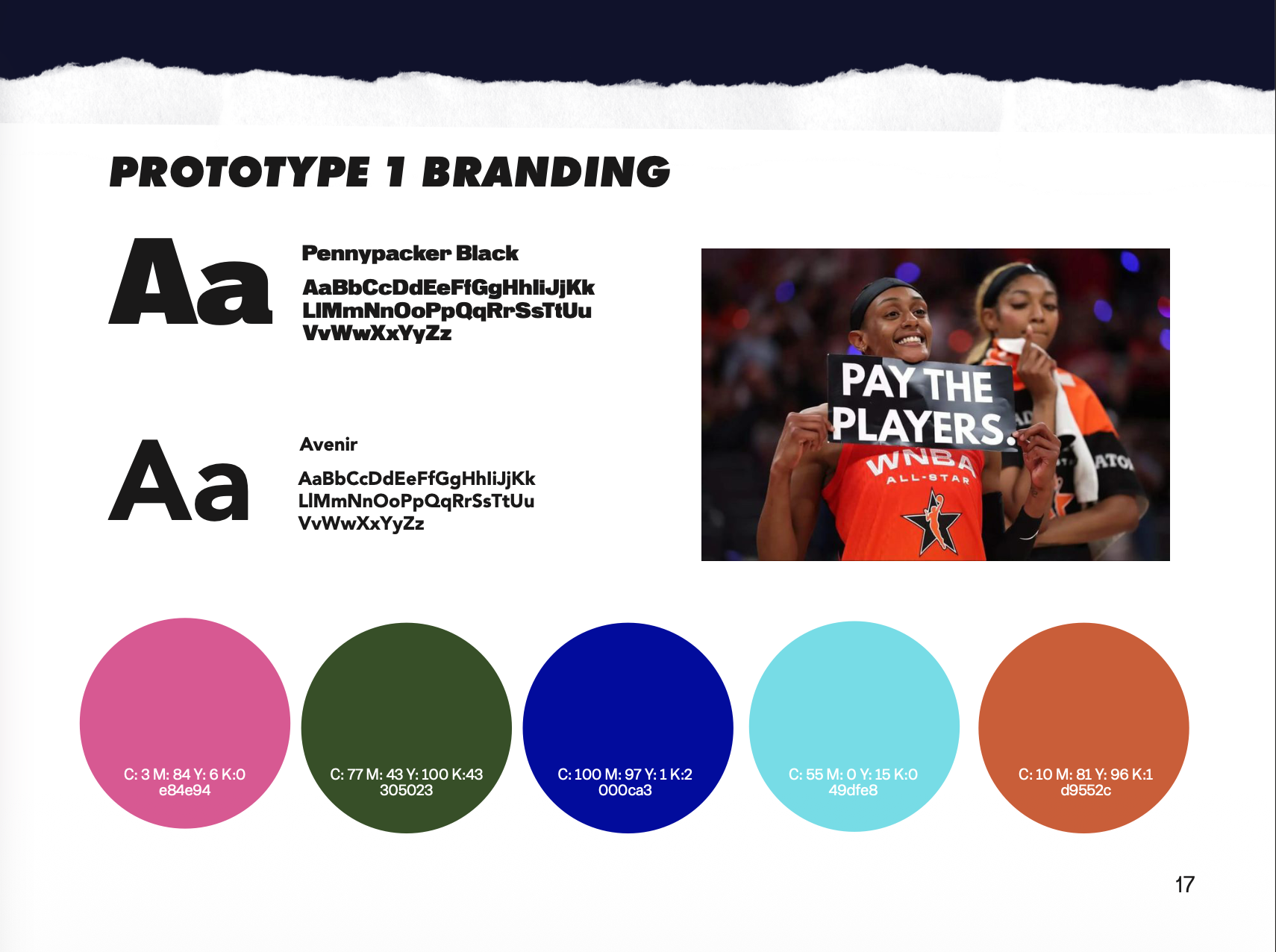
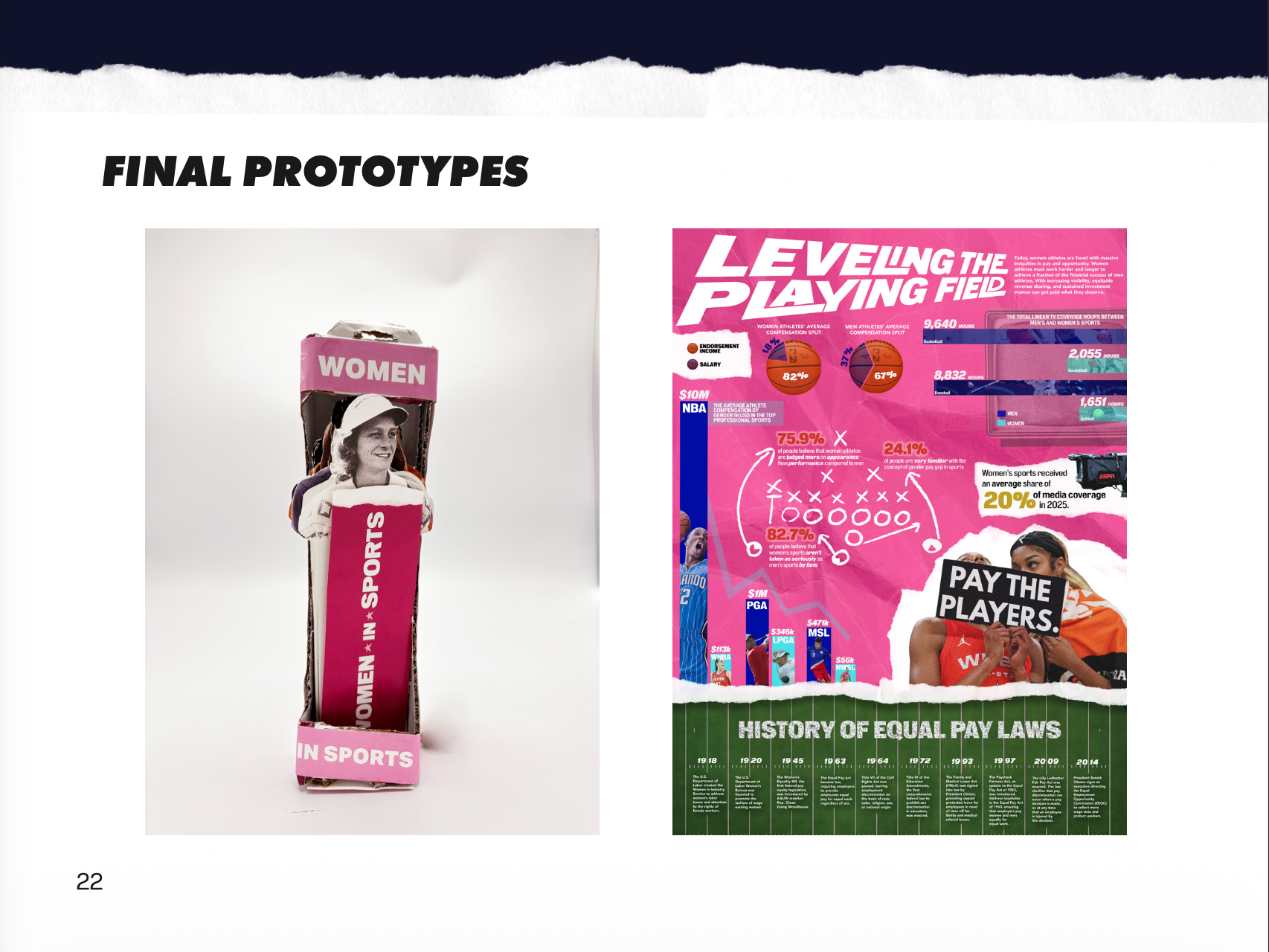
This prototype aims to highlight the inequality of pay within the sports industry through clear graphs, illustrations, and data visualization. Designed as an informational poster for high-traffic areas such as sports arenas and subways, it spreads awareness by presenting research, articles, and survey data in a quick and digestible format.
By making complex data easy to understand, the design helps a broad audience recognize the gender pay gap in sports and encourages greater awareness and conversation around the issue.
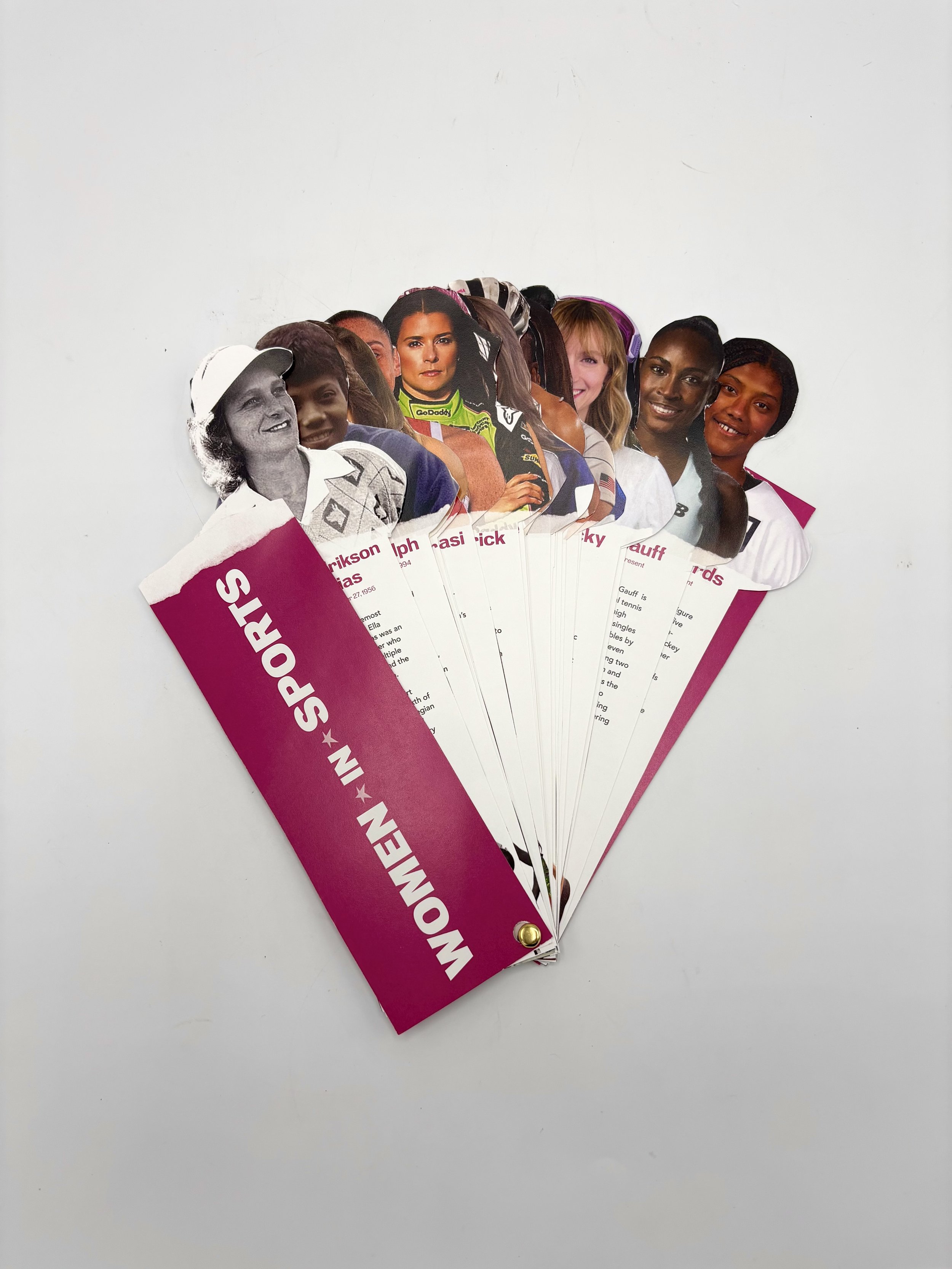
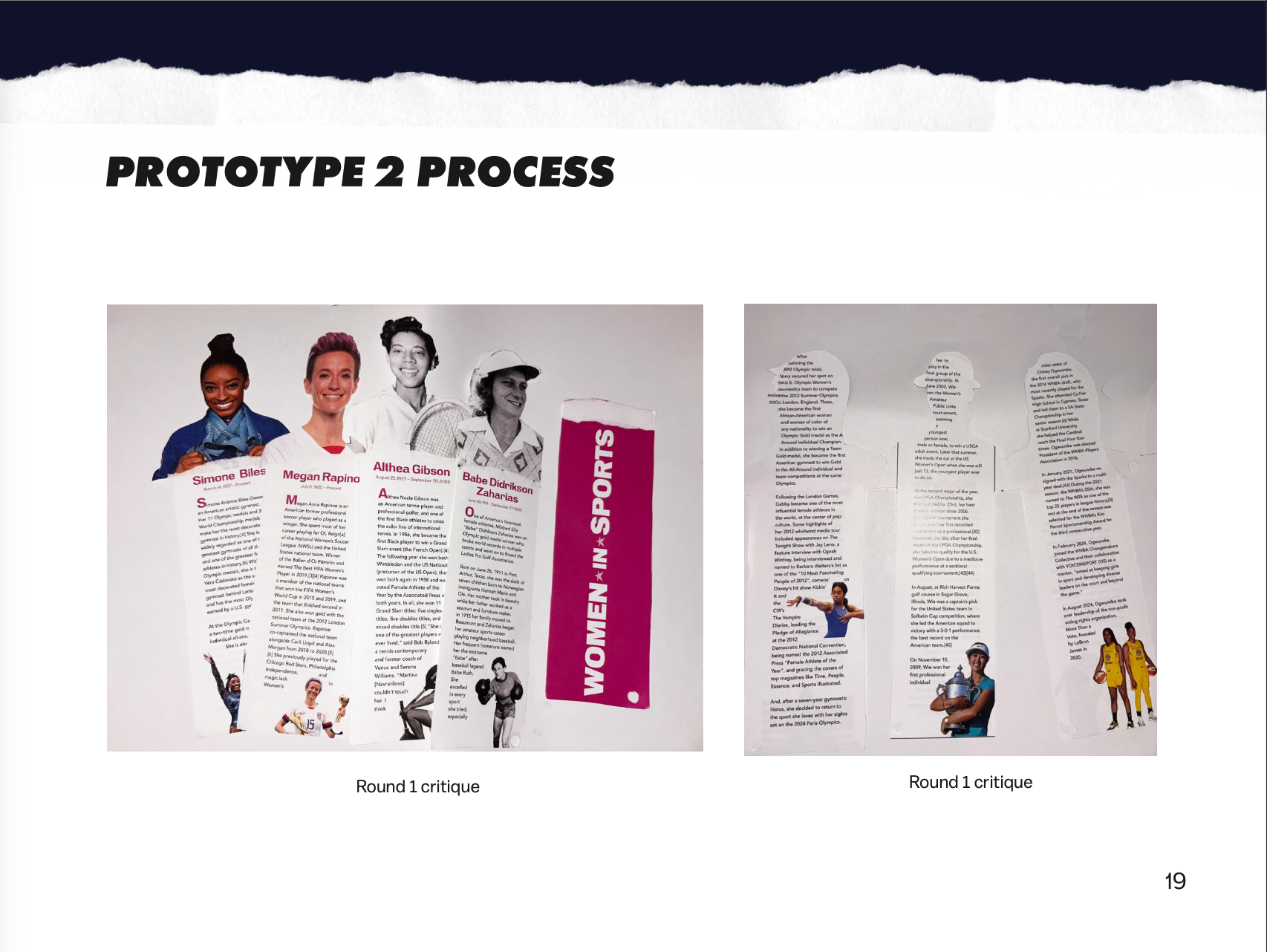
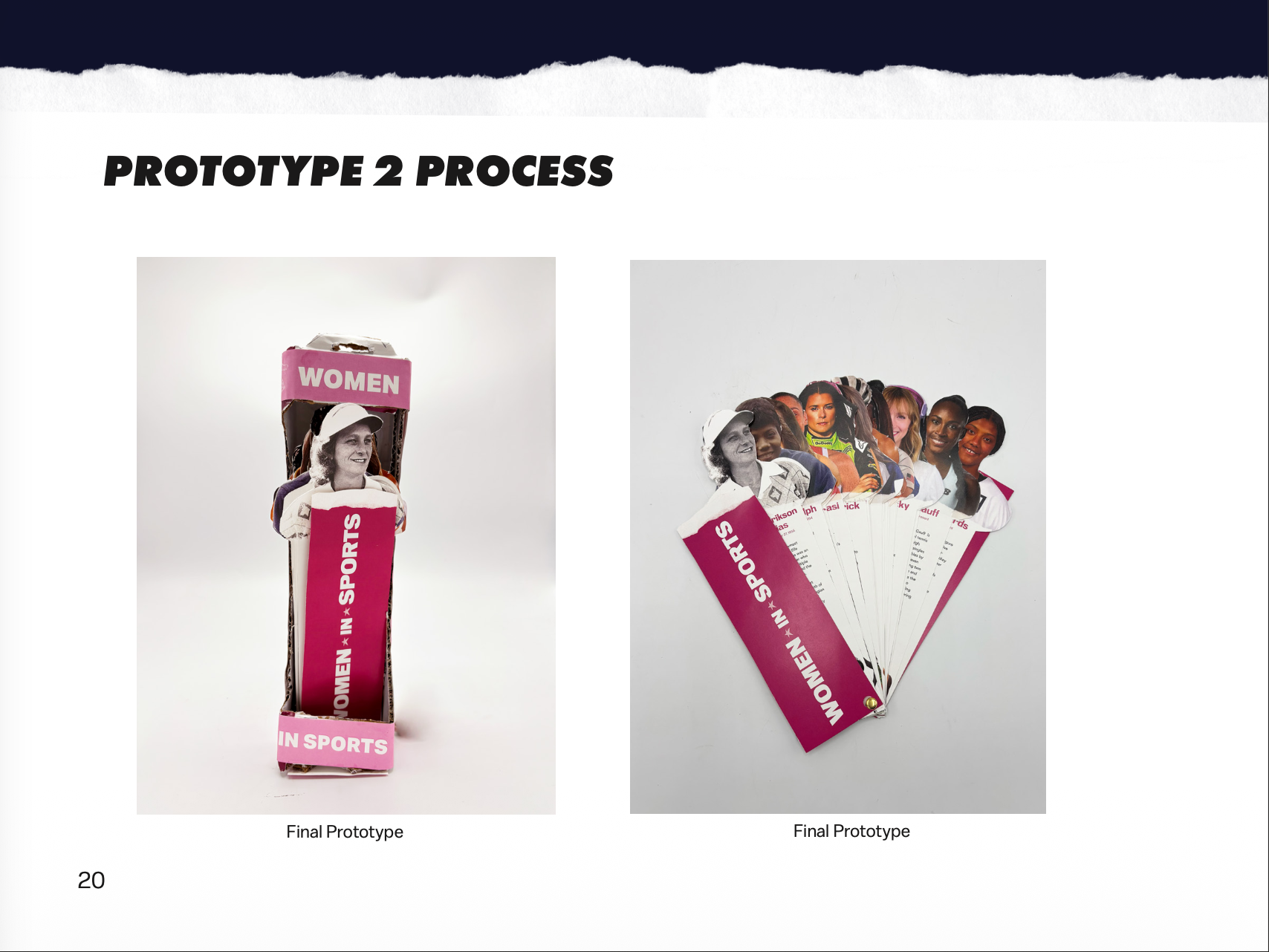
This book is designed to celebrate and document the impact of influential women in sports through compelling storytelling, imagery, and thoughtfully organized content.Structured as an accessible and engaging publication, it combines brief biographies, historical context, and visual elements to highlight the achievements, challenges, and legacies of female athletes across a range of sports.
By presenting these stories in a clear and visually engaging format, the book aims to both educate and inspire readers, bringing greater visibility to figures who have often been overlooked or underrepresented in sports history.
PROTOTYPE 2
CONCLUSION
The gender pay gap in sports remains a persistent and visible reflection of broader inequality within the industry. Despite significant progress in performance, viewership, and cultural impact, female athletes continue to receive less compensation, fewer sponsorship opportunities, and reduced media coverage compared to their male counterparts. This disparity is not a reflection of talent or effort, but of longstanding structural and institutional barriers that shape how women’s sports are valued and promoted.
I hope by addressing these issues we can raise the awareness in which it demands intentional change from leagues, sponsors, media organizations, and audiences alike. These prototypes are here to give people the information they need to make a difference. Knowing and understanding women in sports and the disparities they face is just the first start. Together we can make a difference.
